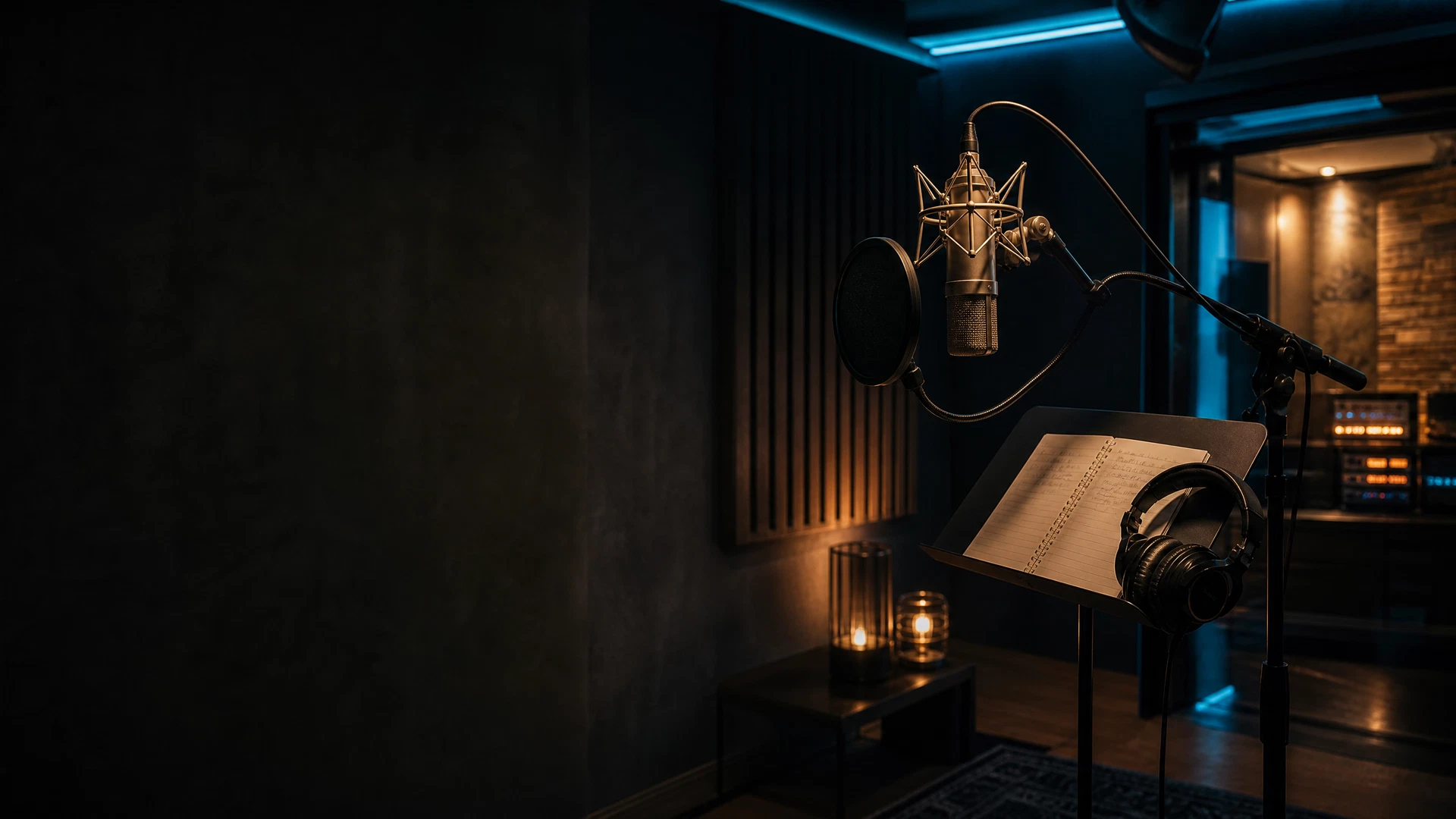
Build the record before the session starts
The studio is where a performance is captured, refined, and shaped. It works best when the creative decisions that can be made beforehand are already made. Know the song form, confirm the final instrumental, and decide where the hook, verses, doubles, harmonies, and ad-libs belong.
For rap vocals, small arrangement decisions affect the entire session. A clear map helps the artist stay present on the microphone instead of spending paid studio time searching for the next line or deciding whether a phrase needs a double.
- Bring the final instrumental file and a backup copy
- Have lyrics and section notes available on a phone or tablet
- Mark spots for doubles, stacks, punch-ins, and ad-libs
- Choose two reference tracks for tone, energy, and vocal balance
Use reference tracks to communicate the sound
Reference tracks are a fast way to communicate intent. They can demonstrate whether the lead should feel dry and immediate, wide and layered, intimate and close, or aggressive and forward. The point is not to copy another artist. It is to give the engineer a shared language for vocal tone, space, and impact.
Bring references that match the performance goal. One track may help define the lead-vocal presence while another may illustrate how the hook opens up. Clear references make decisions about monitoring, doubles, and effects more efficient.
Capture the lead, then build the details
A focused lead performance gives the session a center. Once it is captured, the record can be developed with intentional layers. Doubles can increase weight or urgency. Selective ad-libs can create movement. Harmonies and stacks can make hooks feel larger without crowding the verse.
The best layered vocal arrangements leave room for the lyric. More tracks do not automatically create more impact. The right layers are the ones that support the emotion and rhythm of the song.
Plan the next step before you leave
Before ending the session, confirm what happens next. That may mean scheduling another recording block, preparing the session for mixing, or collecting the materials needed for a remote mix. Ask which files need to be approved and what information will help the next stage move quickly.
Houston artists who arrive prepared can spend more of the session performing and less of it solving avoidable logistics. That makes the recording process calmer, more creative, and more useful.
Frequently Asked Questions
What should a rap artist bring to a Houston recording session?
Bring the final beat, lyric notes, reference tracks, and a plan for your lead, doubles, hook layers, and ad-libs. Water and a realistic timeline also help keep the session focused.
Do I need to memorize every lyric before recording?
Knowing the song closely helps the performance feel confident and keeps the session moving. Keeping lyric notes nearby is still useful for confirmations and punch-ins.
How many reference tracks should I bring?
Two focused references are usually enough: one for vocal tone or mix balance and one for energy, space, or arrangement.